The European Union (EU) has announced that Nigeria and other sub-Saharan African countries will receive €510 million in humanitarian aid as part of a larger €1.9 billion package for 2025. This funding aims to address growing crises and support vulnerable populations in West and Central Africa, the Sahel, Lake Chad Basin, and other regions.
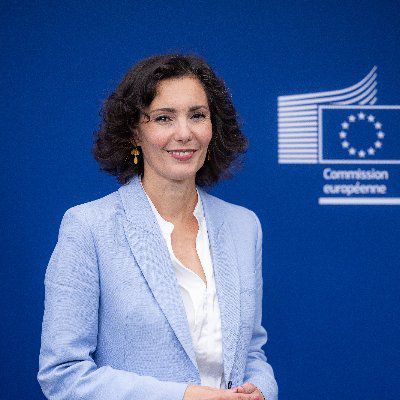
The announcement was made by Ms. Hadja Lahbib, EU Commissioner for Equality, Preparedness, and Crisis Management, as reported by various news agencies and the EU Delegation in Nigeria on January 21, 2026.
The aid will be distributed through various channels, including the UN, Red Cross/Red Crescent, and international and local organizations, focusing on emergency assistance, food security, healthcare, and protection.
“‘The humanitarian system is under unprecedented strain, and public funding alone will not meet the scale of the crisis. Europe is taking action, committing an initial €1.9 billion for 2026. As the largest humanitarian donor, we are taking our political responsibility and leading the global response. That’s why I’m in Davos: to mobilize the private sector to think bigger, move faster, and act together. This is a test of solidarity, and Europe is rising to the challenge.’
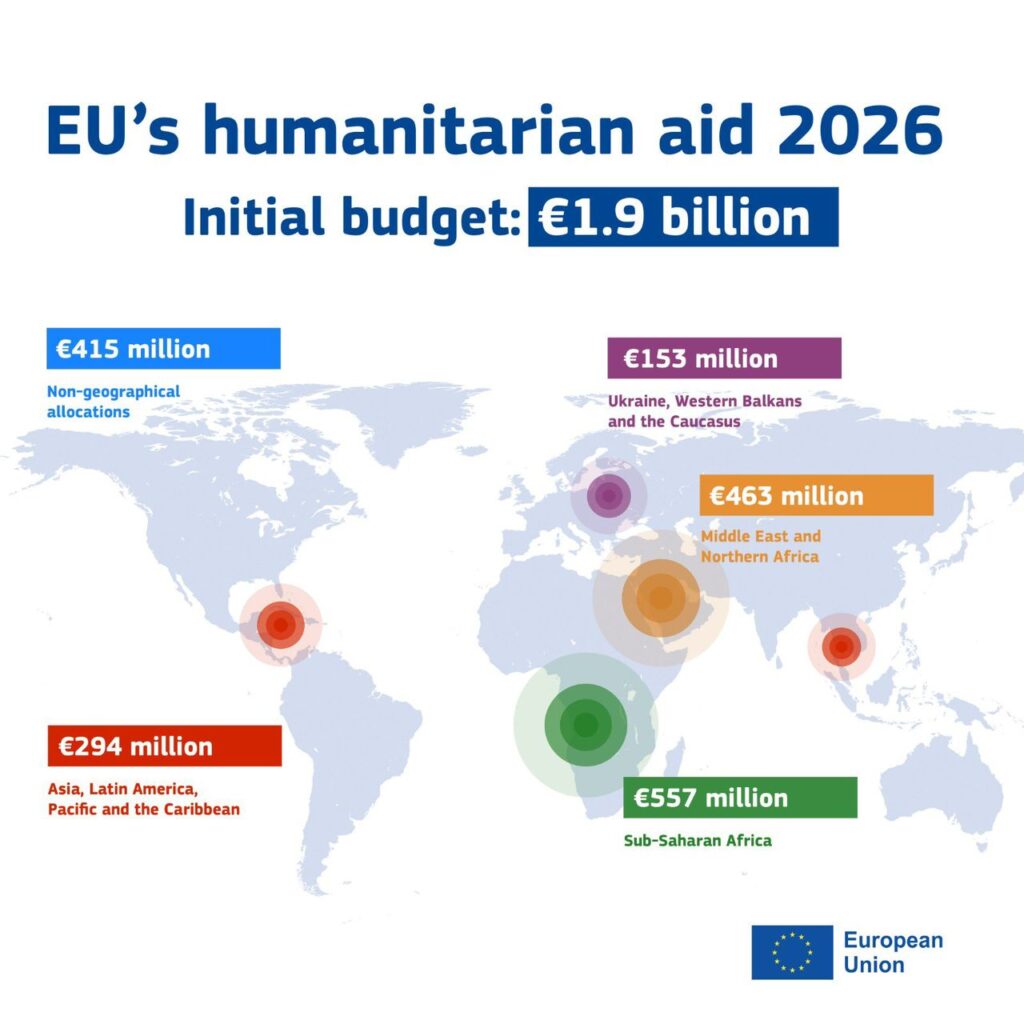
The map highlights the EU’s humanitarian aid budget for 2026, totaling €1.9 billion, distributed.
This is not the first time Nigeria will be benefiting from the EU. The country has a long-standing relationship with the EU, dating back to the 1970s, when it led a group of African, Caribbean, and Pacific states (ACP) during the negotiation of the Lomé Convention of 1975.
Since then, Nigeria has received significant aid and development support from the EU. For instance, between 2008 and 2013, Nigeria received €580 million from the EU. In 2021-27, the EU allocated €731 million in grant funding for Nigeria’s development.
Nigeria has used EU aid for various purposes, including:
– Humanitarian Assistance: Providing emergency food aid, shelter, access to clean water, sanitation, and hygiene, basic primary healthcare, protection, and education to conflict-affected people, especially in the North-East region.
– Development Projects: Supporting initiatives in agriculture, renewable energy, healthcare, education, and governance.
– Health Sector: Improving access to quality primary healthcare, fighting malnutrition, and strengthening resilience and social protection.
– Governance and Democracy: Strengthening democratic institutions, supporting electoral processes, and promoting human rights.
– Infrastructure Development: Investing in renewable energy, such as solar power, and improving transportation infrastructure.
– Agricultural Development: Supporting cocoa and dairy sectors, promoting climate-smart agriculture, and enhancing market access.