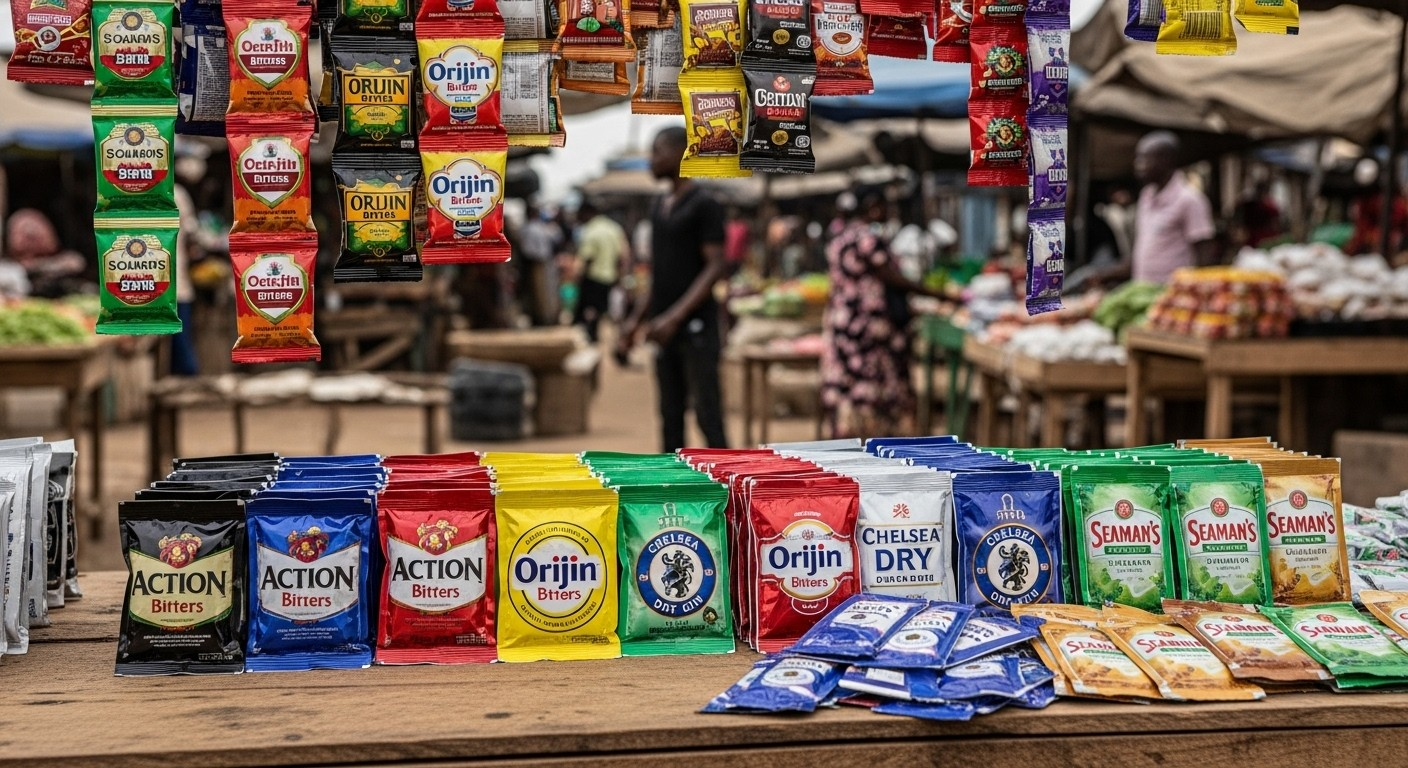
The Executive Secretary of the Food, Beverages and Tobacco Senior Staff Association, Solomon Adebosin, has called on the National Agency for Food and Drug Administration and Control (NAFDAC) to engage industry stakeholders in dialogue following the enforcement of its ban on alcohol sold in sachets and PET bottles below 200ml.
In an interview with ARISE News on Tuesday, Adebosin warned that the policy, which took effect on January 21, 2026, could have wide-ranging consequences for local manufacturers, employment, and foreign investment if implemented without adequate consultation.

NAFDAC had initially announced on November 11, 2025, that the ban would take effect by December 2025, following a directive from the Senate. Enforcement was temporarily suspended by the Federal Government to allow for stakeholder consultations.
However, the agency’s Director-General, Prof. Mojisola Adeyeye, later confirmed that NAFDAC received a fresh order from the Senate to proceed with the ban, emphasizing that the measure is intended to protect public health, particularly vulnerable groups such as children, adolescents, and young adults.
While acknowledging the public health rationale, Adebosin highlighted the economic and social roles that sachet alcohol products play in Nigeria’s economy.
“Now the claim is that it’s been in sachet, it becomes very accessible, but the idea of products coming in sachet is because of the way the economy in Nigeria is now,” he said. “We have something for ourselves to be a sachet economy in most of the things that we have because of affordability.”
He further argued that smaller packaging encourages moderation.
“It also helps in ensuring moderation, because when you just have it in bits, you take it and then you’re okay,” Adebosin said. “What we always talk about and advocate for is drink responsibly, drink in moderation. And so when it is in this form, it becomes easy for someone to just take one sachet and then you’re okay, rather than consuming a larger volume and going overboard.”
Beyond consumption concerns, Adebosin cautioned that the ban could negatively affect indigenous businesses and employment.
“The challenge we have is that when you come against products like this, which are made by indigenous Nigerians, we are looking at the issue of employment. By shutting it down, you’re going to be affecting that,” he said.
He also warned that the ban could discourage foreign investment.
“When foreign direct investors see the way local investors are being treated, it’s not going to encourage them to say they want to come and invest in Nigeria,” he stated.
Adebosin urged NAFDAC to explore alternative solutions and engage stakeholders before enforcing outright bans.
“We can have a dialogue on this. We can look at different ways of solving this issue. The issue should not just be ban… We should not be thinking of ban as the first response,” he said.