
The Independent National Electoral Commission (INEC) has warned that uncertainty surrounding the amendment of the Electoral Act could affect key operational plans for the 2027 general elections, while insisting that the commission remains fully prepared to deliver credible polls.
The INEC Chairman, Prof. Joash Amupitan (SAN), spoke on Wednesday in Abuja during the commission’s first quarterly consultative meeting with civil society organisations (CSOs), where he underscored the importance of early legislative clarity for effective election management.
According to Amupitan, INEC has already drawn up its election timetable and schedule of activities in line with the existing Electoral Act, but cautioned that any changes introduced by an amended law could require adjustments.
“While we have made our submissions to the National Assembly, the passage of the amendment may have implications for certain items in our timetable,” he said. “However, for now, the commission has no choice but to operate within the framework of the subsisting Electoral Act.”
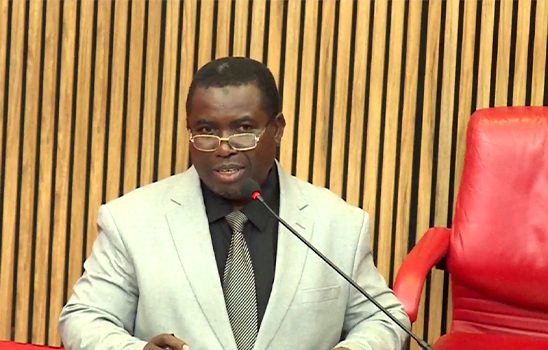
He urged CSOs to lend their voices to calls for the speedy conclusion of the amendment process, noting that prolonged delays could complicate preparations for the 2027 polls.
“We seek your support in urging the National Assembly to speed up work on the amendment of the Electoral Act,” the INEC chairman said.
Amid the legislative uncertainty, Amupitan reassured Nigerians that the commission’s preparations were on course, announcing that INEC would conduct a nationwide voter revalidation exercise ahead of the general elections.
“A credible register of voters remains the bedrock of free, fair and transparent elections. Accordingly, the commission will embark on a nationwide voter revalidation exercise ahead of the 2027 general election,” he said.
Turning to nearer-term electoral activities, Amupitan called on CSOs to intensify voter education and mobilisation in the Federal Capital Territory (FCT) ahead of the Area Council elections scheduled for Saturday, February 21, 2026.
“The ongoing PVC distribution in the FCT will end on February 10, 2026, and we do not want anyone to be disenfranchised,” he said.
He also appealed for greater civic vigilance, urging CSOs to monitor the conduct of political parties and to help curb hate speech, vote buying, misinformation, disinformation and election-related violence.
Providing an update on preparations for the FCT polls, Amupitan said a total of 1,680,315 registered voters are expected to vote across 2,822 polling units in the six Area Councils of Abaji, AMAC, Bwari, Gwagwalada, Kuje and Kwali.
He disclosed that 570 candidates would contest chairmanship, vice-chairmanship and councillorship positions, adding that INEC has completed the recruitment and training of ad hoc staff and is finalising the configuration of Bimodal Voter Accreditation System (BVAS) devices for voter accreditation and result upload to the INEC Result Viewing (IReV) portal.
Amupitan further confirmed that bye-elections would be held on the same day in the Ahoada East II and Khana II State Constituencies in Rivers State, as well as the Kano Municipal and Ungogo State Constituencies in Kano State.
In response to concerns over delays, the House of Representatives on Tuesday denied that the National Assembly was deliberately stalling the Electoral Act Amendment Bill.
Chairman of the House Committee on Electoral Matters, Mr Adebayo Balogun, said the delay was procedural rather than political, noting that work on the bill was ongoing in both chambers and that harmonisation is expected to be completed next week.