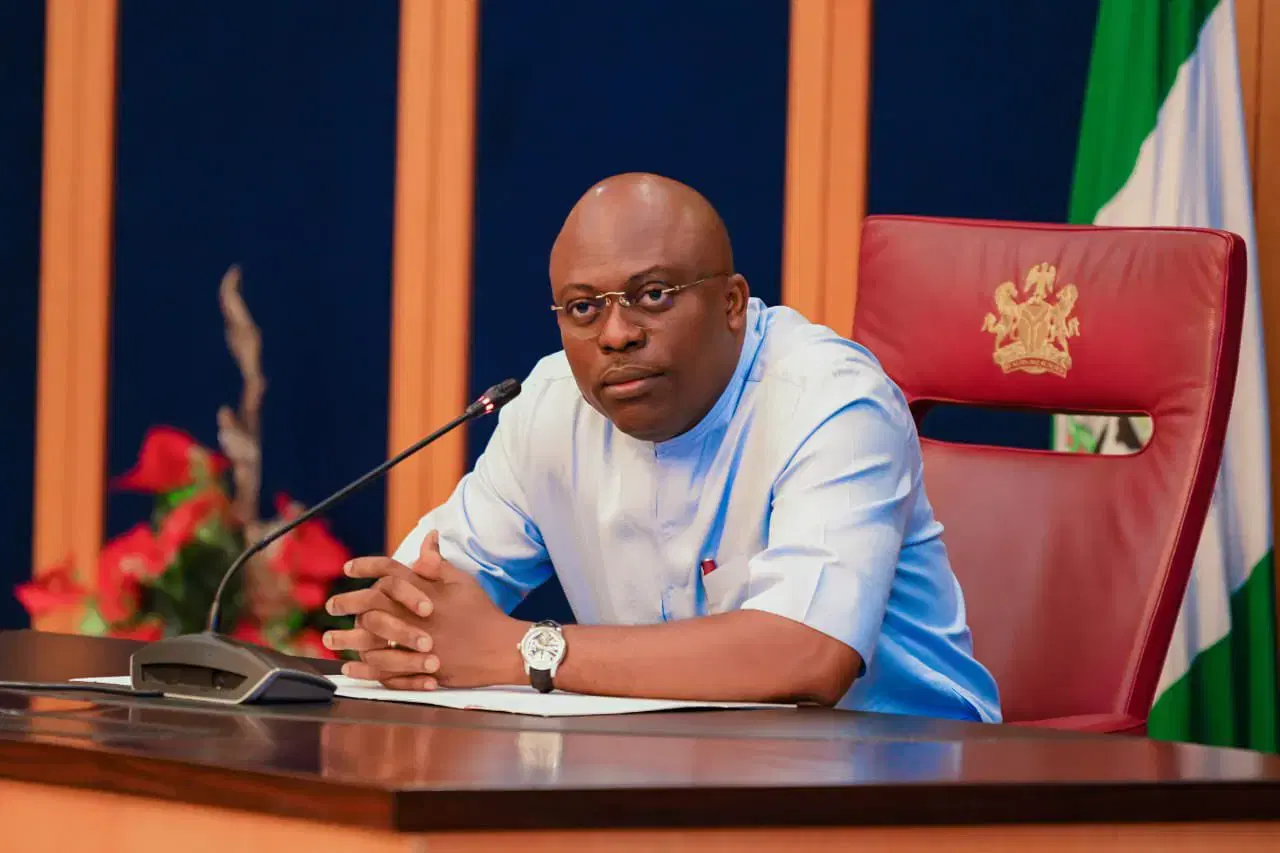
The Conference of Nigeria Political Parties (CNPP), in collaboration with the Coalition of National Civil Society Organisations (CNCSOs), has condemned the renewed move by the Rivers State House of Assembly to impeach Governor Siminalayi Fubara, describing it as a dangerous assault on democracy and calling on President Bola Ahmed Tinubu to intervene.
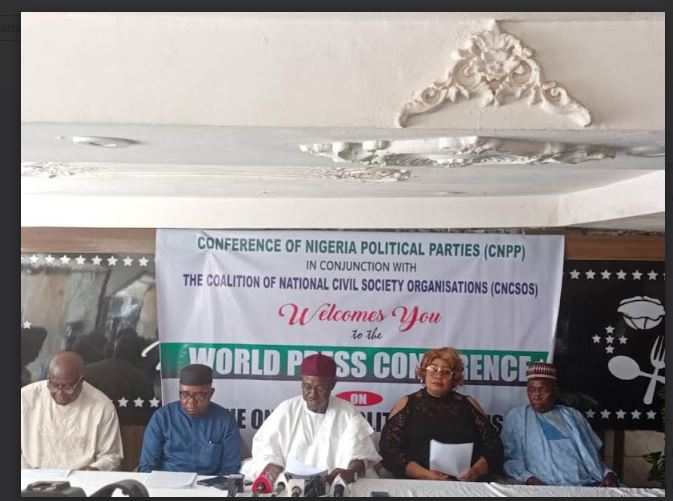
Speaking at a world press conference in Abuja, the groups warned that Nigeria’s democratic foundations would be undermined if the impeachment process against Governor Fubara is allowed to proceed unchecked.
Addressing journalists on behalf of the coalition, the Chairman of the Elders Forum, Coalition of National Civil Society Organisations, Baba Abubakar El-Nafaty, said the governor had committed no offence warranting impeachment, but had instead become a victim of political godfatherism.
He alleged that the crisis in Rivers State was being driven by external political forces, led by the Minister of the Federal Capital Territory, Nyesom Wike.
According to El-Nafaty, the CNPP and over 75 civil society organisations that make up the coalition believe the unfolding situation in Rivers State poses a serious threat to Nigeria’s democracy and national stability.
They argued that the impeachment threats were not based on governance failures or constitutional breaches, but represented what they described as a calculated attempt to gain political and financial control of the state through the legislature.
“The situation in Rivers State has moved beyond local politics. It is now a critical test of Nigeria’s commitment to constitutional democracy, separation of powers and federalism,” El-Nafaty said.
He maintained that there were no credible allegations of gross misconduct against Governor Fubara, no breakdown of governance and no public demand for his removal.
The groups accused the Rivers State House of Assembly of being “weaponised” for political purposes, warning that allowing such actions to succeed could embolden similar moves across the country.
They cautioned that if governors can be removed at the behest of external political interests, the sovereignty of the electorate and democratic stability would be severely compromised.
The CNPP and CNCSOs also raised concerns over alleged conditional political settlements, citing claims by Fubara’s loyalists that the FCT Minister imposed terms on the governor in exchange for stopping impeachment efforts. Among the alleged conditions was the immediate ratification of a commissioner list reportedly submitted by the minister.
Questions were also raised over financial accountability during the six-month emergency rule previously imposed on Rivers State. According to figures presented at the briefing, the state allegedly received about ₦254.37 billion from the Federation Account Allocation Committee (FAAC) between March and August 2025.
The groups claimed that probes announced by the House of Assembly into the utilisation of the funds were merely cosmetic, amid allegations that substantial sums were shared among lawmakers during the period.
Describing the situation as a “national democratic emergency,” the CNPP and CNCSOs urged President Tinubu, in his role as Head of State and leader of the All Progressives Congress (APC), to act decisively to halt what they termed legislative anarchy.
Their demands include the immediate termination of all impeachment proceedings against Governor Fubara, an independent investigation into the conduct of the Rivers State House of Assembly, a presidential probe into the alleged political settlements, and a comprehensive forensic audit of all funds received and spent during the emergency rule.
They also called for full accountability for FAAC allocations and internally generated revenue during the period, recognition of Governor Fubara as the legitimate leader of the APC in Rivers State, and the establishment of safeguards to prevent the weaponisation of state legislatures nationwide.
In conclusion, the groups insisted that Governor Fubara must be allowed to govern and Rivers State allowed to develop, stressing that the protection of democratic institutions remains critical to national peace and unity.