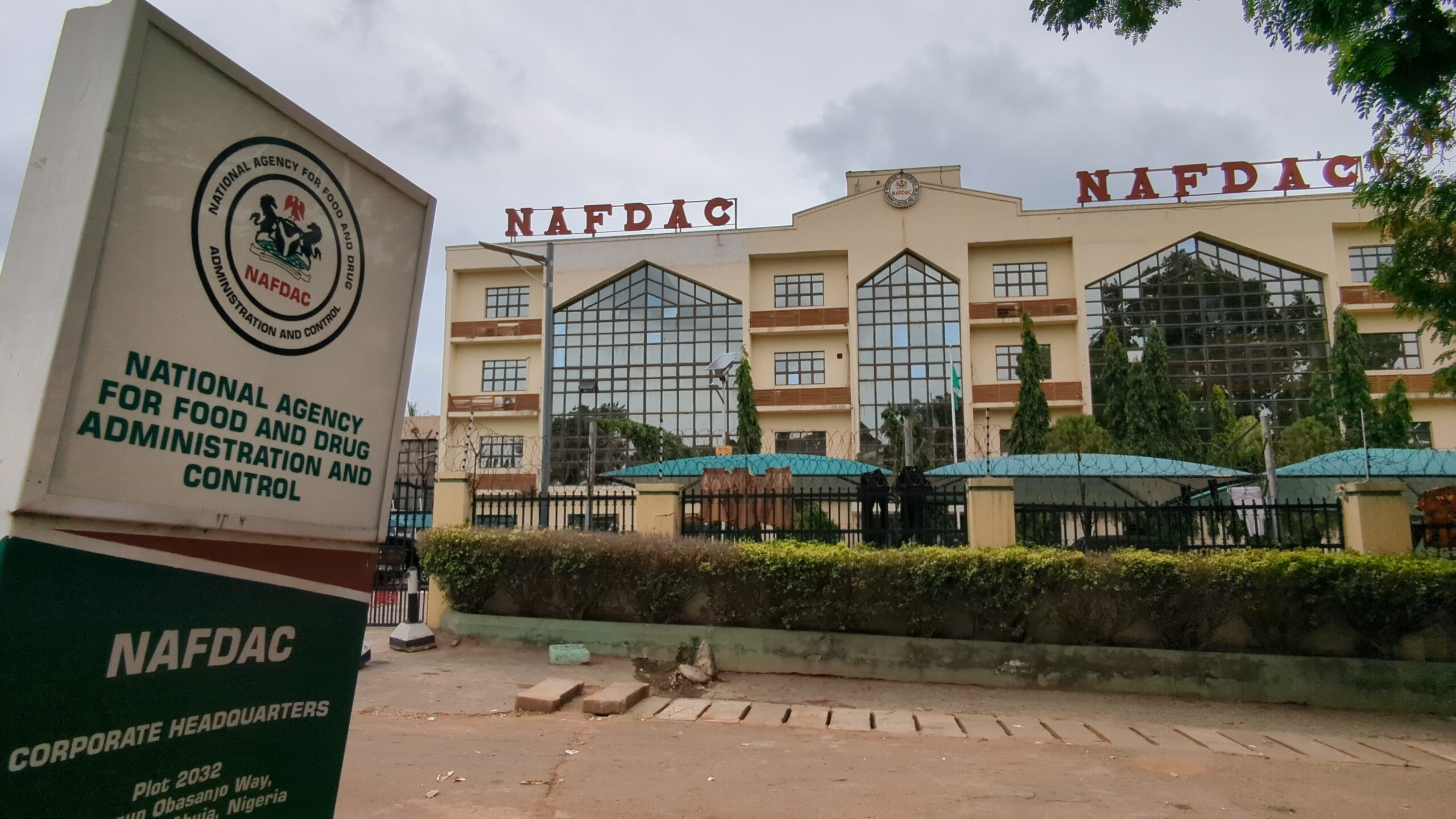
The National Agency for Food and Drug Administration and Control (NAFDAC) has stepped up regulatory action on alcohol distribution, resuming enforcement of its ban on the production and sale of alcoholic beverages packaged in sachets and in plastic or glass bottles below 200 millilitres.
The agency clarified that the move does not involve the shutdown of alcohol manufacturing companies, explaining that enforcement is strictly focused on eliminating sachet alcohol and other small-volume packaging from the market.
In a statement released on Thursday, NAFDAC’s Director-General, Prof. Mojisola Christianah Adeyeye, said the action was taken to address growing public health and social challenges linked to the easy availability of alcohol, particularly among children, adolescents and young adults.
“The National Agency for Food and Drug Administration and Control has resumed enforcement of the ban on the production and sale of alcoholic beverages packaged in sachets and small-volume PET or glass bottles below 200ml, in line with a resolution of the Senate of the Federal Republic of Nigeria and the Agency’s public health mandate,” Adeyeye said.
NAFDAC has resumed enforcement of its ban on alcoholic beverages sold in sachets and small containers below 200ml.
NAFDAC warned that the widespread circulation of high-alcohol-content drinks in cheap, portable and easily concealed packaging has increased accessibility and contributed to underage drinking, addiction, domestic violence, road traffic accidents, school dropouts and other social problems.
Adeyeye said previous measures, including warning labels such as “Not for children,” had proved ineffective in curbing abuse.
“Many parents do not even know their children consume sachet alcohol because the pack size is small, cheap and easily concealed,” she said.
She added that reports from schools have highlighted alarming behavioural trends, citing a recent case where a student reportedly told a teacher he could not sit for an examination without first taking sachet alcohol.
The agency recalled that in December 2018, it signed a five-year Memorandum of Understanding with alcohol manufacturers, alongside the Federal Ministry of Health and Social Welfare and the Federal Competition and Consumer Protection Commission (FCCPC), to phase out sachet and small-volume alcohol packaging by January 31, 2024.
The moratorium was later extended to December 2025 to allow manufacturers to exhaust existing stock and reconfigure production processes.
According to Adeyeye, the renewed enforcement is consistent with both legislative backing and Nigeria’s international health obligations.
“The current Senate resolution aligns with the spirit and letter of that agreement and with Nigeria’s commitment to the World Health Assembly Global Strategy to Reduce the Harmful Use of Alcohol,” she said.
She stressed that the policy is designed to protect public health rather than punish businesses.
“This ban is not punitive; it is protective. It is aimed at safeguarding the health and future of our children and youth by not allowing alcohol in small pack sizes.
“The decision is rooted in scientific evidence and public health considerations. We cannot continue to sacrifice the well-being of Nigerians for economic gain. The health of a nation is its true wealth.”
NAFDAC said it will continue working with the Federal Ministry of Health and Social Welfare, the FCCPC and the National Orientation Agency to intensify public sensitisation on the dangers of alcohol misuse.