Abuja, August 7, 2026
Seven years ago today, How Nigerians woke up to images that felt like a throwback to military rule.
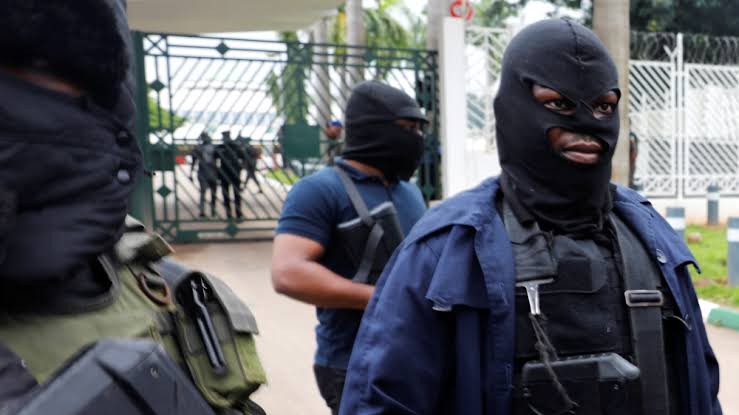
At about 6:00am on Tuesday, August 7, 2018, over 100 hooded operatives of the Department of State Services, DSS, backed by four armored vehicles, sealed off the National Assembly in Abuja. No number plates. No explanation.
Lawmakers, parliamentary staff, and journalists were turned back at the gates. The complex, seat of Nigeria’s democracy, was under siege.
The timing was no coincidence. The National Assembly leadership had called an emergency sitting to consider a N242 billion supplementary budget from INEC for the 2019 elections. But politics had already poisoned the air.
The ruling APC was bleeding members. Senate President Bukola Saraki had just defected to the PDP. Party leaders were demanding he step down. And with President Muhammadu Buhari on a 10-day vacation in London, Vice President Yemi Osinbajo was in charge as Acting President.
By mid-morning, the DSS said the blockade was based on intelligence that weapons would be smuggled into the complex. The Presidency quickly denied authorizing it.
Inside Aso Rock, tension was high. Osinbajo summoned both the DSS DG, Lawal Musa Daura, and the Inspector-General of Police at 1:15pm. Hours later, a terse statement was released: “The Acting President has directed the termination of the appointment of the Director-General, State Security Service, Lawal Musa Daura, with immediate effect.”
Osinbajo called it “a gross violation of constitutional order.”
By 3pm, the masked men were gone. The gates were thrown open.
Daura was taken into house arrest at the Presidential Villa that same day. When Buhari returned from London, he made it clear: there would be no reinstatement. Despite lobbying from members of his inner circle, the President said he had “no plans to bring back Daura under any guise.”
No public trial followed. But the sack was final. Daura exited government and kept a low profile.
The fallout was immediate. Saraki and Speaker Dogara called it “an attempt to subvert democracy.” The PDP labeled it “treasonable.” On social media, Nigerians pushed back with hashtags and videos, forcing the conversation onto the global stage.
SEVEN YEARS LATER
Today, the man at the center of that drama is back in the news.
In January 2026, in an interview on DCL Hausa, Lawal Musa Daura announced he wants to run for Governor of Katsina State in 2027. He said the move followed calls from “prominent indigenes” concerned about insecurity and poor governance in the state.
He did not name a party, but said consultations were “complete.” For many, the 2018 siege will follow him on the campaign trail either as baggage or as proof that he once acted to “protect the system.”
Lawal Daura is not to be confused with Governor Dauda Lawal of Zamfara.
THE BOTTOM LINE
The August 7 siege lasted less than nine hours. But it tested how far Nigeria’s democracy could bend without breaking. Today, the story has come full circle. The enforcer has become the aspirant.
#TodayInHistory #OOJMedia #Nigeria