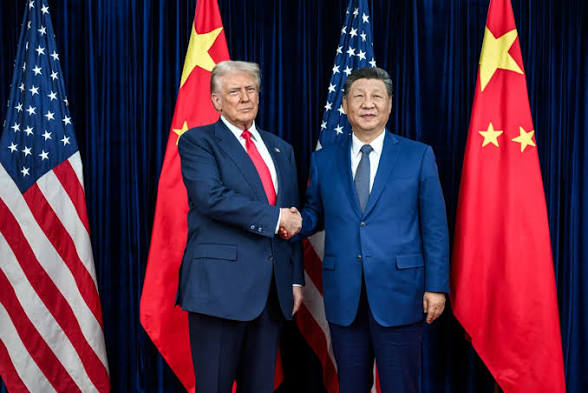
U.S. President Donald Trump will travel to China from May 13 to 15 for a state visit, Beijing confirmed on Monday, setting up the first face-to-face meeting with President Xi Jinping in more than six months.
The visit, at Xi’s invitation, marks the first time a sitting U.S. president has been to China since 2017. It was originally planned for March but was postponed as the Iran conflict escalated.
Trump is scheduled to arrive in Beijing on Wednesday evening. Formal talks are set for Thursday and Friday, with a welcome ceremony, bilateral meeting, a visit to the Temple of Heaven, and a state banquet on the program. A reciprocal visit by Xi to Washington is expected later this year.
Iran and Trade Top the Agenda
The summit comes at a sensitive moment for global geopolitics. Trump is expected to press Xi on China’s economic ties with Iran, particularly its role as the largest buyer of Iranian oil through independent refineries. The U.S. sees Beijing’s leverage as key to maintaining the fragile ceasefire and reopening the Strait of Hormuz.
Trade will also dominate. Since returning to office in January 2025, Trump has pursued an “America First” agenda that pushed U.S. tariffs on Chinese goods to 145% in April 2025. China responded with its own duties and restrictions on rare earth exports.
A truce reached in October 2025 lowered tariffs on both sides, and officials are now working on new mechanisms—a Board of Trade and Board of Investment—to manage non-sensitive trade and investment. U.S. officials say the goal is to rebalance the relationship and restore reciprocity.
A shift In Tone, But Flashpoints Remain
Trump’s approach to China this term has been less confrontational than in his first term. He has repeatedly spoken of a strong personal rapport with Xi and framed the relationship as one of “rebalancing” rather than open rivalry.
Still, major disagreements persist. Taiwan remains the most sensitive issue, with China claiming the island and the U.S. maintaining defense ties with Taipei. Washington is also pressing Beijing over its financial support for Iran and Russia, and over Chinese satellite imagery used by Iran against U.S. forces.
“This will be a visit of tremendous symbolic significance,” said U.S. Principal Deputy Press Secretary Anna Kelly. “But President Trump never travels for symbolism alone. The American people can expect the president to deliver more good deals.”
Analysts say the outcome could influence markets, supply chains and diplomatic alignments across Asia and the Middle East. For now, both sides appear to be testing whether personal diplomacy can turn a period of strategic rivalry into a more manageable economic truce.